
The Future of VR Gaming: Next-Gen Headsets Changing the Industry
Virtual reality has been called the next big thing for so long that the phrase has lost its meaning. Yet the hardware has changed quietly and decisively, and the future of VR gaming now looks less like a moonshot and more like a craft being refined. Here is what next-gen VR headsets actually do differently, and how they are reshaping the VR gaming industry around them.
The first wave of consumer headsets asked a great deal of their owners: a powerful PC, a tangle of cables, sensors bolted to the walls and a high tolerance for discomfort. The current generation asks far less. Many headsets now work out of the box, track your hands without controllers and let you see your living room in colour.
That shift changes who buys a headset, how long they play, what developers can afford to build and how platforms make money. This guide looks at the technology first, then at the business and design questions that will decide where VR goes next.
Why next-gen headsets look so different
The most visible change is size. Older headsets protruded several inches from the face because their lenses needed distance from the display. Newer designs fold that optical path, pulling weight closer to your head and reducing the front-heavy feel that cut many sessions short.
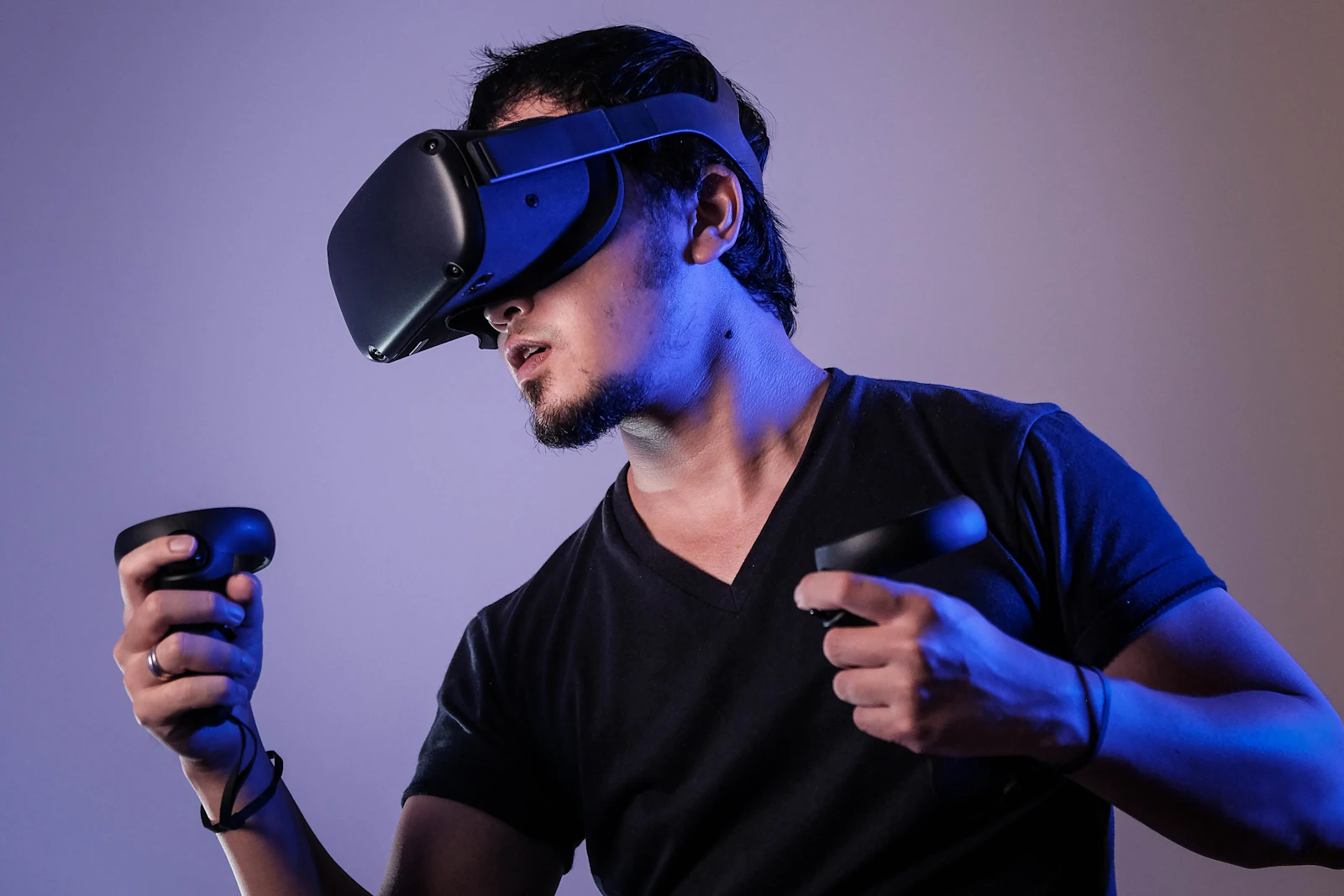
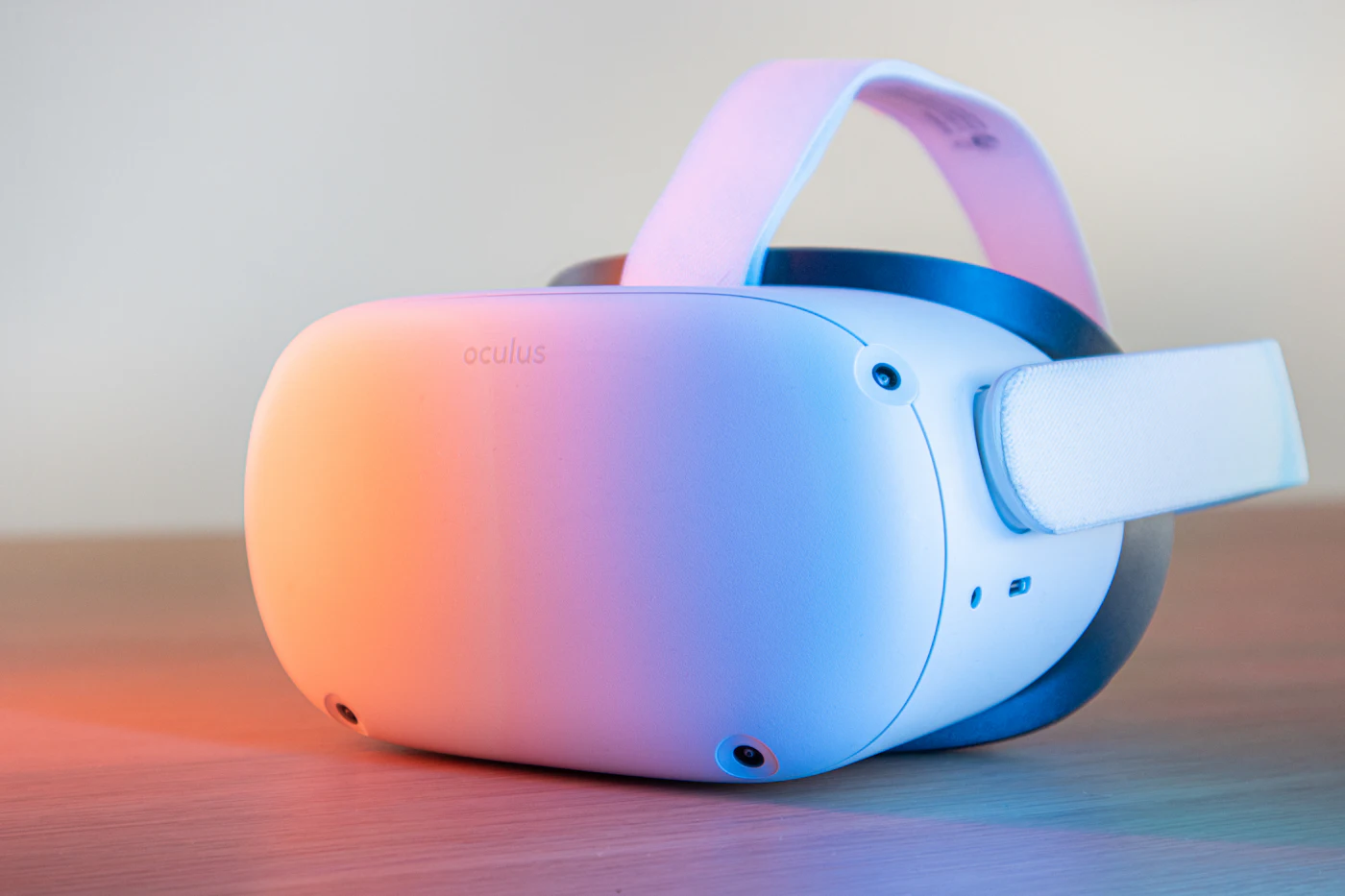
The second change is independence. Standalone headsets, led by Meta's Quest family, carry their own processor, battery and inside-out cameras, so there is no console or PC required. That single decision did more to widen VR's audience than any graphical leap.
The technologies shaping the future of VR gaming
No one component defines the current generation. It is the combination that matters, and each piece comes with its own compromise.
Pancake optics
Pancake lenses bounce light back and forth between polarising layers before it reaches your eye, allowing a much shorter distance between lens and screen. The result is a slimmer headset with sharper edge-to-edge clarity than older Fresnel lenses, which often showed glare and visible ridges. The trade-off is efficiency: pancake optics lose a lot of light, so the displays behind them must be brighter.
Sharper displays, including micro-OLED
Resolution has climbed steadily, reducing the "screen door" effect of visible gaps between pixels. At the premium end, Apple Vision Pro uses micro-OLED panels, tiny high-density displays built on silicon that offer deep contrast. Sony's PlayStation VR2 uses OLED panels too. Most mainstream headsets still rely on LCD, which is cheaper and bright but cannot match OLED's true blacks.
Eye tracking and foveated rendering
Your eye only sees fine detail in a small central area. Foveated rendering exploits that by drawing full resolution where you are looking and less in your peripheral vision. Some headsets use a fixed version that always prioritises the centre of the lens; eye-tracked headsets such as PlayStation VR2 and Apple Vision Pro can move that sharp zone with your gaze. Done well, it frees up processing power for richer scenes. Eye tracking also enables more expressive avatars and gaze-based menus.
Hand tracking
Cameras on the headset can now follow your fingers well enough to pinch, grab and point without controllers. Apple built its interface around eyes and hands, and Quest headsets support controller-free play in many apps. For fast games, physical controllers still win on precision and haptic feedback, but hand tracking lowers the barrier for newcomers and casual experiences.
Mixed-reality passthrough
Colour passthrough uses outward-facing cameras to show your real surroundings inside the headset, with virtual objects layered on top. That enables games played on your actual coffee table or walls, and it makes headsets feel less isolating. Image quality varies considerably between devices, so passthrough is worth judging in person if it matters to you.
Standalone, tethered and wireless streaming
PC-tethered headsets such as the Valve Index draw on a desktop graphics card for the highest visual ceiling, and the Index's external base stations and finger-tracking controllers remain respected by enthusiasts. PlayStation VR2 connects to a PS5 by a single cable. Increasingly, the line is blurring: standalone headsets can stream PC games wirelessly over a strong home network through official tools such as Meta's Air Link and Valve's Steam Link app, as well as third-party software.
Standalone, tethered or mixed reality: the trade-offs
There is no single best type of headset, only the best fit for how and where you play. Exact features differ by model, so treat this as a general guide and check the manufacturer's official specifications before buying.
| Factor | Standalone | PC or console tethered | Mixed-reality focused |
|---|---|---|---|
| Setup | Minimal; works out of the box | Requires a capable PC or console | Minimal, but needs room mapping |
| Visual ceiling | Limited by mobile chip | Highest, driven by external hardware | Varies; often premium displays |
| Freedom of movement | Fully wireless | Cable, unless streaming wirelessly | Usually wireless |
| Game library | Large, curated storefront | Deepest for PC VR enthusiasts | Growing; more apps than games |
| Relative cost of entry | Lowest | Higher once hardware is included | Often highest |
| Best for | Newcomers, families, travel | Simulation, flight and racing fans | Spatial apps, experimental play |
The economics of the VR gaming industry
The hardest problem in VR is not optics. It is arithmetic. The installed base of headsets remains small compared with consoles, phones and PCs, which means even a hit VR game sells to a fraction of the audience a flat-screen game can reach. Budgets have to match.
That creates a familiar loop. Players wait for big games before buying hardware, and studios wait for a bigger audience before funding big games. Platform holders have tried to break it in several ways:
- Direct investment. Platform owners have funded or acquired studios to secure exclusive content.
- Curated storefronts. Tighter curation helps quality games stand out, though it can make discovery harder for small developers.
- Subscriptions. Rotating game catalogues, such as Meta's monthly subscription service, give players a low-risk way to sample titles and give developers an additional revenue stream.
- Cross-platform tools. The OpenXR standard from the Khronos Group helps developers target multiple headsets without rebuilding from scratch.
For developers, the safer bets have often been smaller, polished games, VR versions of established franchises and multiplayer social experiences that grow through friends. Mixed reality adds a new category again, though whether it attracts a lasting audience is still an open question.
The hardest problem in VR is not optics. It is arithmetic.
How game design is adapting
VR design has matured from spectacle to empathy for the body. Developers now plan around how long people can comfortably wear a headset, which tends to favour shorter missions, frequent save points and games that can be enjoyed in sessions measured in minutes rather than hours.
Motion sickness remains the medium's defining design constraint. It usually arises when your eyes register movement your inner ear does not feel. Common mitigations include:
- Teleport and "snap turn" options alongside smooth movement.
- Comfort vignettes that narrow your field of view during motion.
- Stable reference points, such as a cockpit or virtual nose, in vehicle games.
- High, consistent frame rates, which matter more in VR than on a flat screen.
Accessibility has improved too. Look for seated and standing modes, height calibration, one-handed control schemes, subtitle options and adjustable interface distance. Hardware comfort is part of the same story: better weight distribution, rear battery packs and support for prescription lens inserts make longer, more inclusive play possible.
Health and safety: playing well
Good habits make VR more enjoyable and reduce avoidable injuries. Clear your play space of furniture, pets and anything fragile, and always set up the headset's boundary system before you start. Take regular breaks, and stop at the first sign of nausea, dizziness, eye strain or headache rather than pushing through.
Keep headset lenses out of direct sunlight, which can damage the displays, and clean face interfaces between users. If you share a headset with family, check each device's minimum age recommendation and parental controls, as manufacturers set different thresholds and update them over time.
What to watch next
Predictions in this field age quickly, so treat the following as directions rather than promises. Headsets are likely to keep getting lighter, with the long-term goal of something closer to glasses. Wider adoption of eye tracking could make foveated rendering a standard efficiency rather than a premium feature.
Researchers and manufacturers are also exploring varifocal optics, which aim to reduce the eye strain caused by focusing at a fixed distance, alongside better batteries and lower-latency wireless streaming. Expect mixed reality and traditional VR to keep converging, and announcements to outpace actual products. For current specifications and release details, always check the manufacturer's official site.
The bottom line
The future of VR gaming headsets is being decided less by dramatic breakthroughs than by steady refinement: slimmer optics, smarter rendering, freer movement and kinder design. Each improvement removes another reason not to put a headset on, and that is how niche technologies become mainstream.
The industry's economics still lag its hardware, and that gap will shape which games get made. If you are ready to step in, choose the headset type that suits your space and habits, play in short sessions, and enjoy the medium as it grows. And for evenings when you would rather sit back than stand up, our pick of hidden gem psychological thrillers offers immersion of a different kind.
Frequently asked questions
Is a standalone headset good enough for serious gaming?
For most players, yes. Standalone headsets run a large library of games, and many can also stream PC VR titles wirelessly. Enthusiasts chasing the highest visual detail in simulation games may still prefer a PC-tethered setup.
What is foveated rendering, in simple terms?
It is a technique that draws full detail only where you are looking and less detail in your peripheral vision. With eye tracking, the sharp area follows your gaze, freeing up processing power without an obvious loss in quality.
How can I reduce motion sickness in VR?
Start with short sessions, use comfort settings such as teleport movement, snap turning and vignettes, and stop as soon as you feel unwell. Many people find their tolerance improves gradually, but if symptoms persist, take a longer break.
Are VR headsets suitable for children?
It depends on the device. Manufacturers publish minimum age recommendations that differ between headsets, along with parental controls. Check the official safety guidance for your specific model and supervise younger players closely.