

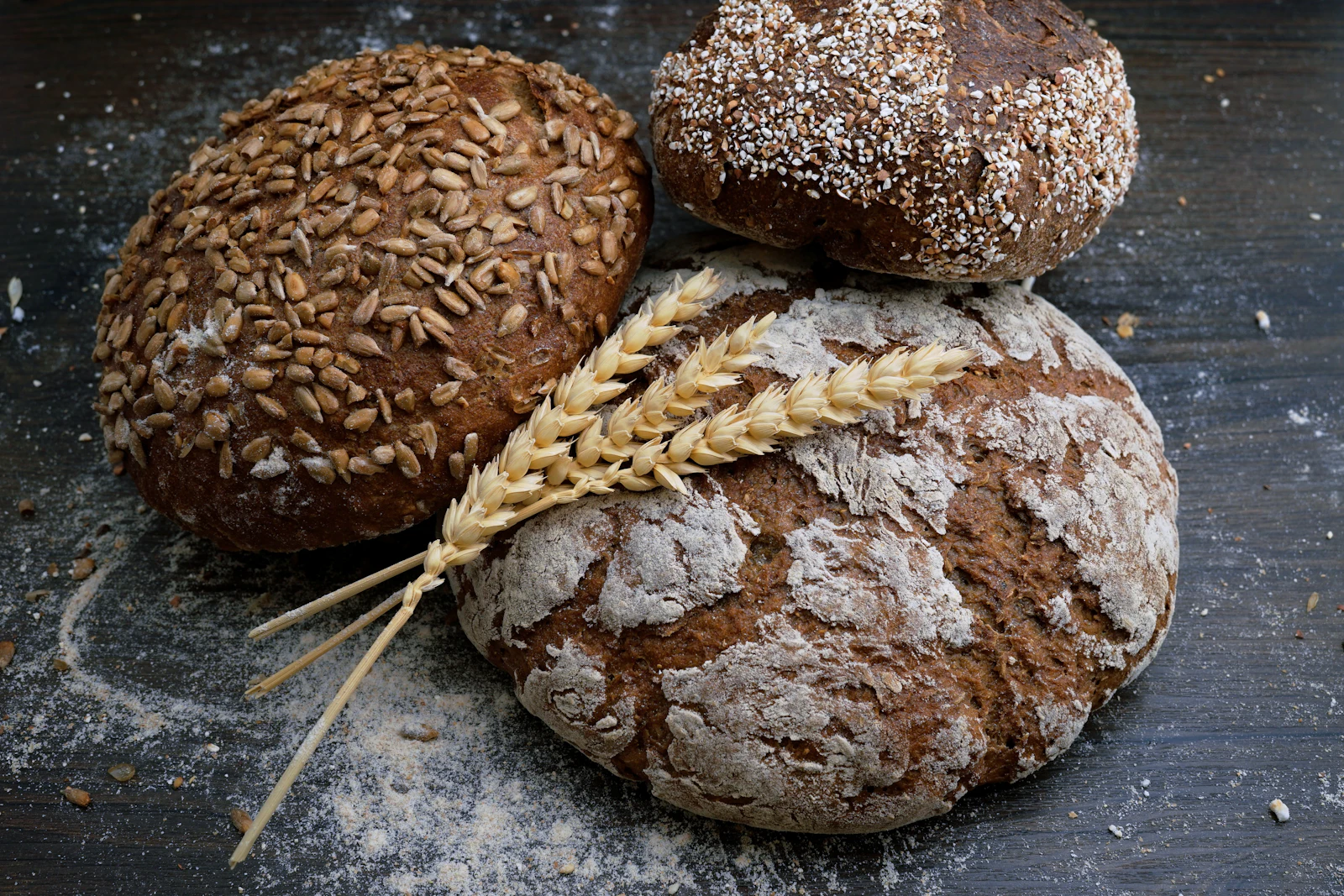
Demystifying Wild Yeast: The Chemistry Behind Perfect Sourdough Bread Crumb Structures
Slice a good sourdough loaf and you are looking at a frozen record of chemistry: gas bubbles inflated by wild yeast, held in place by stretched protein and set by heat. Understanding sourdough bread chemistry turns crumb structure from a matter of luck into something you can read, diagnose and steer.
Bakers often talk about an “open crumb” as if it were a single goal, but the interior of a loaf can be judged in several ways: the size and spread of the holes, the sheen on their walls, the tenderness under your thumb. A tight, even crumb is perfect for sandwiches; a wild, glossy one is perfect for olive oil. Neither is wrong, as long as it is the crumb you intended.
What follows traces a loaf from jar to cooling rack, explaining what each stage does chemically and how it shows up in the slice. It closes with a diagnostic table and the rules for keeping a starter healthy.
Inside the jar: the starter ecosystem
A sourdough starter is a stable culture of wild yeasts and lactic acid bacteria living in a paste of flour and water. Common residents include yeasts such as Saccharomyces cerevisiae and Kazachstania humilis, alongside bacteria such as Fructilactobacillus sanfranciscensis, long known as Lactobacillus sanfranciscensis. The exact mix varies with flour, temperature and feeding habits.
The division of labour is roughly this. Yeasts ferment sugars released from flour into carbon dioxide and ethanol, and the carbon dioxide is what inflates the dough. The bacteria produce lactic and acetic acids, which lower the pH, deepen flavour and help keep many unwanted microbes at bay.
Gluten: the scaffolding of the crumb
When wheat flour meets water, two groups of proteins, glutenin and gliadin, hydrate and bond into gluten. Glutenin contributes elasticity and strength, the springiness that pulls dough back after you stretch it. Gliadin contributes extensibility, allowing the network to stretch without tearing.
Every hole in the crumb began as a tiny gas cell, many of them introduced as air during mixing. As fermentation produces carbon dioxide, those cells inflate, and the gluten film around each one stretches. A crumb opens well when the network is both strong enough to hold gas and extensible enough to let bubbles expand. Too tight and the bubbles stay small; too weak and they merge, rupture and collapse.
Hydration, autolyse and the baker’s percentage
Why water changes the crumb
Hydration is the ratio of water to flour. Wetter doughs are more extensible and more mobile, so gas cells can expand and coalesce into the larger, irregular holes many bakers prize. The trade-off is handling: a slack dough needs more structure built through folding and shaping, or it spreads rather than rises.
Autolyse
An autolyse — mixing just flour and water and resting it before adding salt and starter — was popularised by the French baking teacher Raymond Calvel. During the rest, the flour hydrates fully, gluten begins to form without kneading and the flour’s own enzymes start working. The dough becomes noticeably more extensible, which tends to make shaping easier and the crumb more open.
Reading a formula in baker’s percentages
Baker’s percentages express every ingredient as a proportion of the total flour, which is fixed at 100%. Here is a purely hypothetical example to illustrate the arithmetic, not a tested recipe:
- Flour: 1,000 g (100%)
- Water: 750 g (75%)
- Starter at 100% hydration: 200 g (20%)
- Salt: 20 g (2%)
The nominal hydration is 75%, but the starter itself holds 100 g of flour and 100 g of water. Including it, the dough contains 1,100 g of flour and 850 g of water, giving a true hydration of about 77%. That small gap explains why the same stated hydration can feel different from one formula to the next.
Fermentation: gas, acid and time
Bulk fermentation is where crumb is largely decided, as yeast fills the gluten network with gas while bacteria steadily acidify it. Acid has a double-edged effect. Moderate acidity tightens and strengthens gluten, which helps a dough hold its shape. Push fermentation too far, however, and the combination of rising acidity and the flour’s protein-degrading enzymes begins to break the network down. Over-fermented dough turns slack, sticky and reluctant to hold a shape.
Bakers commonly find that warmer, wetter fermentation favours milder lactic acid, while cooler temperatures and stiffer starters tilt the balance towards sharper acetic acid. Temperature also governs pace: warm dough ferments quickly and can overshoot, while cool dough gives you a wider window and more complex flavour. Salt slows fermentation slightly and tightens gluten, which is one reason it is often added after an autolyse.
An open crumb is not an achievement of hydration alone; it is a record of how well gas, gluten and time were kept in balance.
Shaping and proofing
Shaping organises the gas you have spent hours building. Drawing the dough’s surface tight creates a taut outer skin that channels expansion upward rather than outward, giving the loaf height and a cleaner ear when scored. The skill lies in creating tension without crushing every bubble: degas too much and the crumb tightens, too little and large pockets remain trapped beneath the crust.
Proofing is the final rise, often done slowly in the fridge, where cold slows the yeast while flavour develops. A gentle fingertip press is the usual test, though it is an imperfect one:
- Under-proofed: the dent springs back immediately; the baked loaf may burst unevenly and show a dense crumb with a few large tunnels near the top.
- Well proofed: the dent springs back slowly and partially.
- Over-proofed: the dent stays put or the dough sags; the loaf spreads, scores poorly and bakes flat with a pale crust and small, even holes.
The bake: oven spring, steam and colour
In the first minutes of baking, the loaf expands dramatically. Gas expands with heat, water and alcohol vaporise, and the yeast enjoys a final burst of activity before heat kills it. This is oven spring.
Steam keeps the surface moist and supple during this phase, so the crust does not set before the loaf has finished expanding. It also gelatinises surface starch, giving a glossy crust. Inside, starch granules absorb water and swell as the temperature climbs, while gluten proteins firm; together they set the bubble walls into a permanent structure.
Colour comes later, once the surface dries. Maillard reactions between amino acids and reducing sugars produce browning and savoury, roasted flavours, while caramelisation of sugars adds bittersweet depth at higher surface temperatures. An over-fermented dough often browns poorly because its microbes have consumed much of the available sugar.
Cooling is part of baking
A freshly baked loaf is still setting: moisture redistributes and gelatinised starch firms as it cools. Cut too early and even a well-fermented crumb can seem gummy. Lean loaves benefit from an hour or two on a rack; dense rye breads are often left far longer.
Flour choices: protein, wholegrain and rye
Bread flour is milled from harder wheats and typically carries more gluten-forming protein than all-purpose flour, giving a stronger network for high-hydration doughs. Wholegrain flour absorbs more water and ferments faster, while its bran particles cut through gluten strands, so wholegrain loaves usually have a closer, more tender crumb.
Rye plays by different rules. Its proteins form little usable gluten, so structure comes largely from starch and gummy fibres called pentosans. Rye flour is also rich in starch-degrading enzymes, and here sourdough’s acidity is essential: it restrains those enzymes so they do not break down the starch and leave a sticky, collapsed interior. That is why traditional rye breads are so closely tied to sourdough.
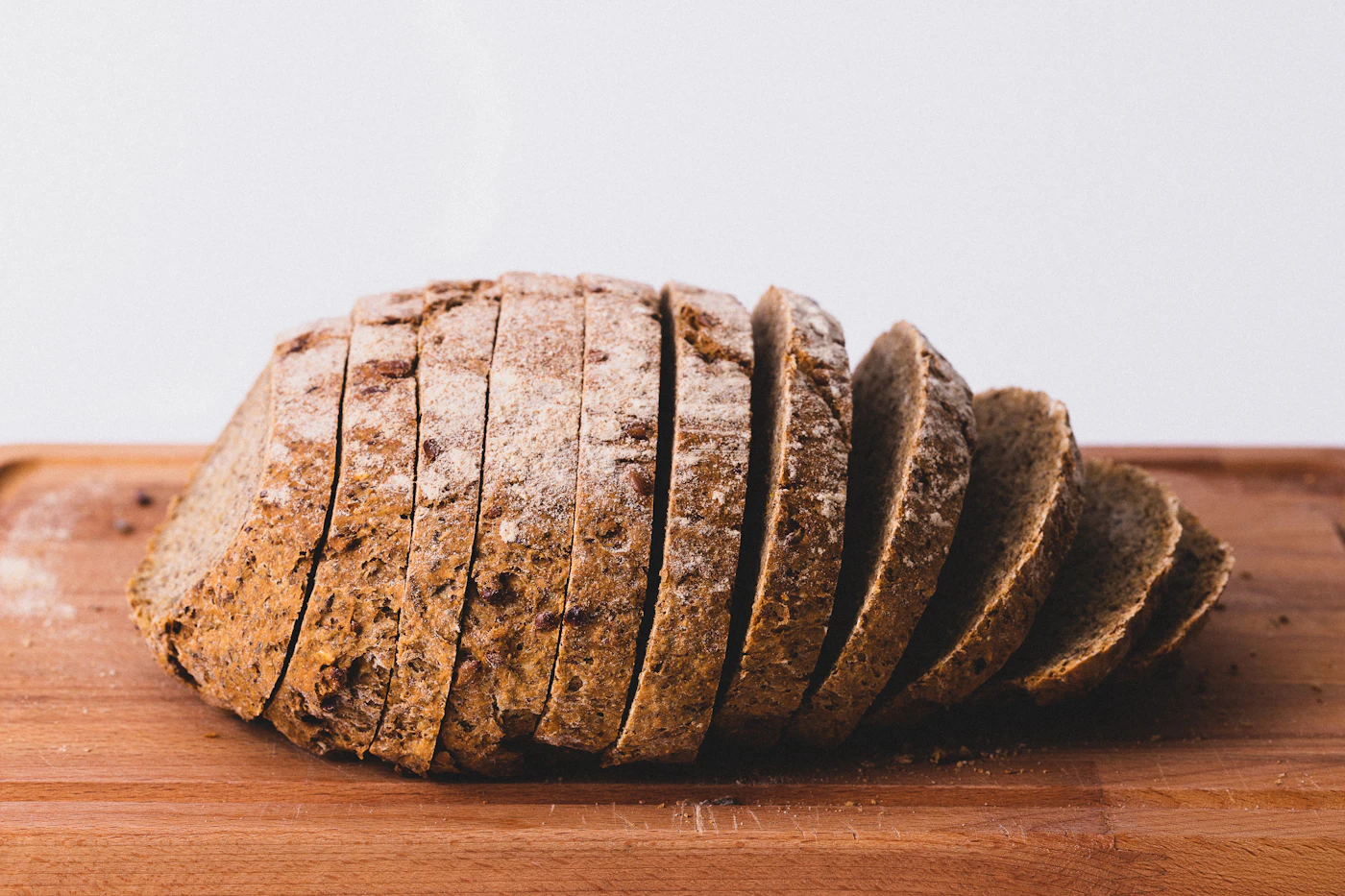
Reading your crumb structure: a diagnostic table
| Crumb symptom | Likely cause | What to change |
|---|---|---|
| Dense, tight crumb with a few large tunnels under the top crust | Under-fermentation or under-proofing | Extend bulk fermentation, ferment warmer or check that the starter is active and at its peak |
| Flat loaf, small even holes, sticky crumb and a pale crust | Over-fermentation | Shorten bulk, ferment cooler or use a smaller proportion of starter |
| Gummy crumb in an otherwise well-risen loaf | Cut too soon or underbaked | Bake longer and let the loaf cool fully before slicing |
| Large random voids beside dense patches | Air trapped during shaping, or uneven fermentation | Shape more deliberately and degas large surface bubbles |
| Tight crumb in a high-hydration dough that spread in the oven | Weak gluten development or too little tension | Add sets of folds, lower hydration slightly or build more tension when shaping |
Starter care and food safety
A healthy starter smells pleasantly sour, yeasty or faintly fruity, and rises predictably after feeding. A layer of grey liquid on top, often called hooch, is usually a sign of hunger rather than spoilage; stir it in or pour it off and feed. Regular feeding with fresh flour and water keeps the culture vigorous and acidic, which is its main defence against unwanted microbes.
Keep jars and utensils clean. If precision appeals, our beginner’s guide to molecular gastronomy at home applies the same weigh-everything discipline to gels and foams.
The bottom line
Sourdough bread chemistry comes down to a handful of interacting forces: microbes making gas and acid, gluten holding that gas, water lending mobility and heat fixing everything in place. Crumb structure is simply the visible sum of how well those forces were balanced.
Treat each loaf as an experiment. Note hydration, temperatures and timings, read the crumb against the table above and adjust one thing at a time. Within a few bakes, the slice on your board will tell you what happened, and what to do next.
Frequently asked questions
Does higher hydration always mean a more open crumb?
No. Extra water makes dough more extensible, but without enough gluten development, fermentation and shaping tension, a very wet dough simply spreads and bakes with a tight, uneven crumb.
Why does my sourdough taste more sour some weeks than others?
Temperature, starter consistency and fermentation time all shift the balance of lactic and acetic acid. Longer, cooler fermentation and stiffer starters tend to taste sharper, while warmer, wetter conditions usually taste milder.