

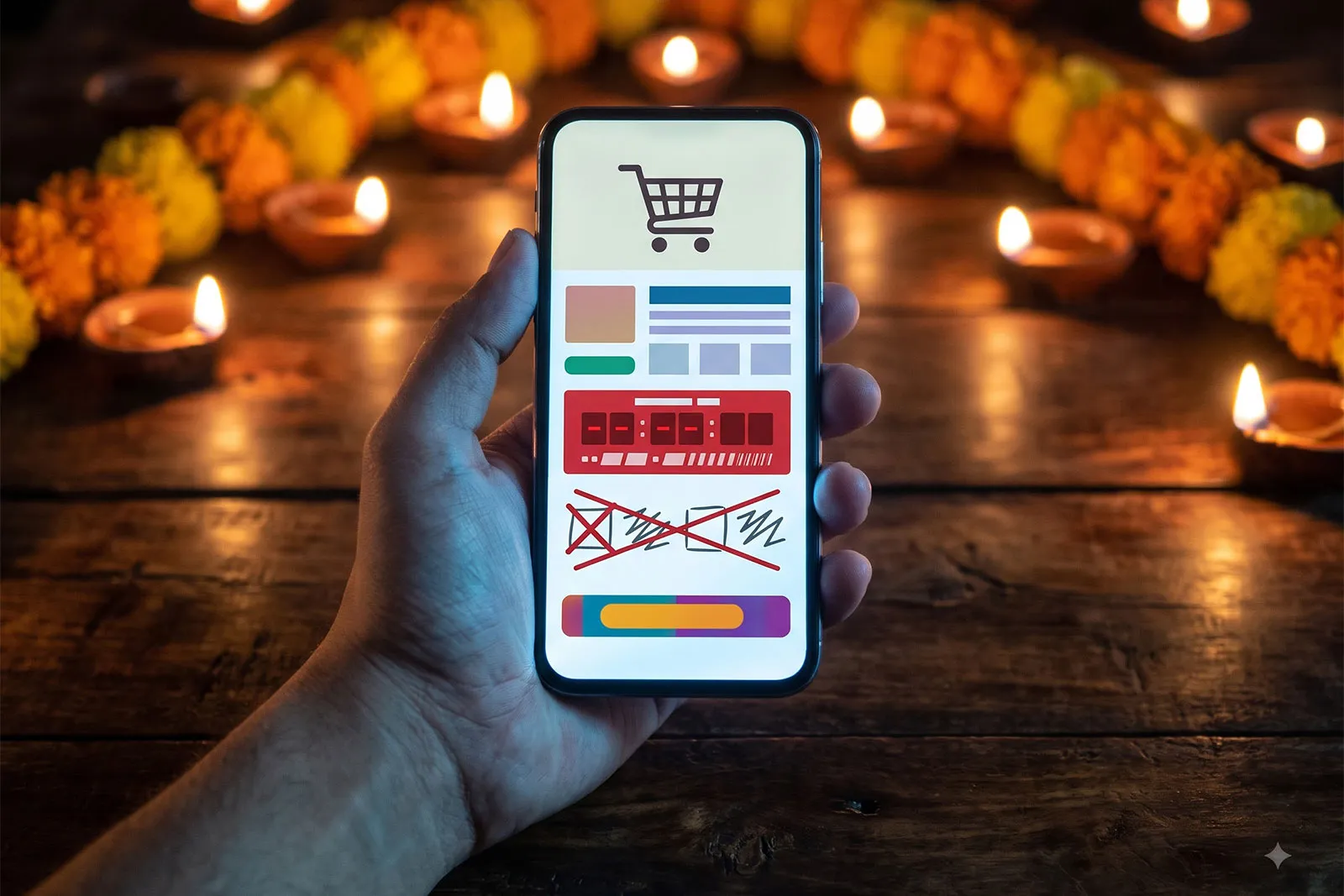
Image: AI-generated with Google Flow
Fake Discounts and Dark Patterns in Online Sales: How to Spot Them
A sale page is built to make you decide fast. Some of that is ordinary marketing. Some of it crosses a line India drew in 2023, when the consumer regulator listed 13 "dark patterns", design tricks that push you into buying what you didn't mean to, and banned them for every platform, advertiser and seller.
The rule in one paragraph
The Guidelines for Prevention and Regulation of Dark Patterns, 2023 were notified on 30 November 2023 under the Consumer Protection Act. They say plainly: "No person, including any platform, shall engage in any dark pattern practice." The government treats these practices as unfair trade practices, which is what gives a complaint its teeth.
Five tricks to watch for during a sale
False urgency
"Only 2 left!" or "30 people are viewing this", when it isn't true. The guidelines use almost that exact example. Reload the page or check later: a timer that restarts, or a stock count that never moves, is a tell.
Basket sneaking
Extra items appear in your cart at checkout without you choosing them: an extended warranty, "protect promise" insurance, a donation. Delivery charges and taxes disclosed at purchase don't count. Pre-ticked boxes do. In June 2026 the CCPA fined an ed-tech platform ₹5 lakh for a pre-selected ₹10 donation, and said "consumer consent cannot be assumed through pre-selected options."
Drip pricing
Parts of the price stay hidden until the end: a "platform fee", a "handling charge", a convenience fee that only shows on the payment screen. Before you pay, compare the final amount with the product page. If it grew and nobody told you why, that is the pattern.
Bait and switch
The ₹999 deal that brought you in is suddenly "unavailable" at payment, and a ₹1,499 alternative is offered instead. Back out and check whether the cheap item was ever really in stock.
Confirm shaming and interface interference
The "No thanks, I don't care about my phone's safety" button, or a "Skip" link printed in pale grey. The rules cover wording that uses guilt or fear, and designs that hide the option you actually want. A cousin of these is "forced action": making you sign up for something unrelated, or share personal details, before you can buy. India's data law also limits what an app can demand, as our guide to the DPDP Act explains. In September 2026 a ride app was fined ₹10 lakh over guilt-tripping tip prompts.
The "70% off" that isn't
A big struck-through price is the oldest sale trick. Under the Consumer Protection Act, 2019, it is an unfair trade practice to mislead people about the price at which a product is "ordinarily sold" (section 2(47)), or to advertise a bargain price you don't intend to honour. In practice, judge the price you pay, not the discount. Check the same item on another site, and watch it for a week or two before the sale if you can. A good deal still looks good without the strike-through.
For packaged goods, the printed unit sale price is a faster check than any percentage.
Where to report a dark pattern
- National Consumer Helpline: call 1915 (8 am to 8 pm), or WhatsApp or SMS 8800001915, or file at consumerhelpline.gov.in.
- Jagriti app: launched in December 2024, it lets you report a web address where you suspect a dark pattern. Reports go to the CCPA as complaints.
- Keep evidence: screenshots of the product page and the payment screen, with time and date.
Platforms were told in June 2025 to audit themselves for dark patterns within three months, and 26 have since declared that they comply. Those are the platforms' own claims, so your screenshots still matter. If a sale purchase goes wrong after delivery, our guide to returns and refunds covers the next steps.
Frequently asked questions
Is every countdown timer illegal?
No. A sale that really ends at midnight can say so. The problem is a false deadline or false scarcity meant to rush you.
Can I get money back for an add-on I didn't choose?
Ask the platform first, citing the pre-ticked box. Your consent can't be assumed, and the National Consumer Helpline can take the complaint further.
Sources
- Guidelines for Prevention and Regulation of Dark Patterns, 2023, Central Consumer Protection Authority, 2023.
- Government notifies guidelines on dark patterns, Press Information Bureau, 2023.
- Jago Grahak Jago and Jagriti apps launched, Press Information Bureau, 2024.
- Advisory on self-audit of dark patterns, Press Information Bureau, 2025.
- E-commerce platforms submit self-declarations on dark patterns, Press Information Bureau, 2025.
- CCPA penalties for basket sneaking, Press Information Bureau, 2026.
- CCPA penalty for confirm shaming, Press Information Bureau, 2026.
- Consumer Protection Act, 2019, Department of Consumer Affairs, 2019.
- National Consumer Helpline, Department of Consumer Affairs, accessed 2026.