
Image: AI-generated with Google Flow
Unit Sale Price: The Number on the Label That Shows Which Pack Is Cheaper
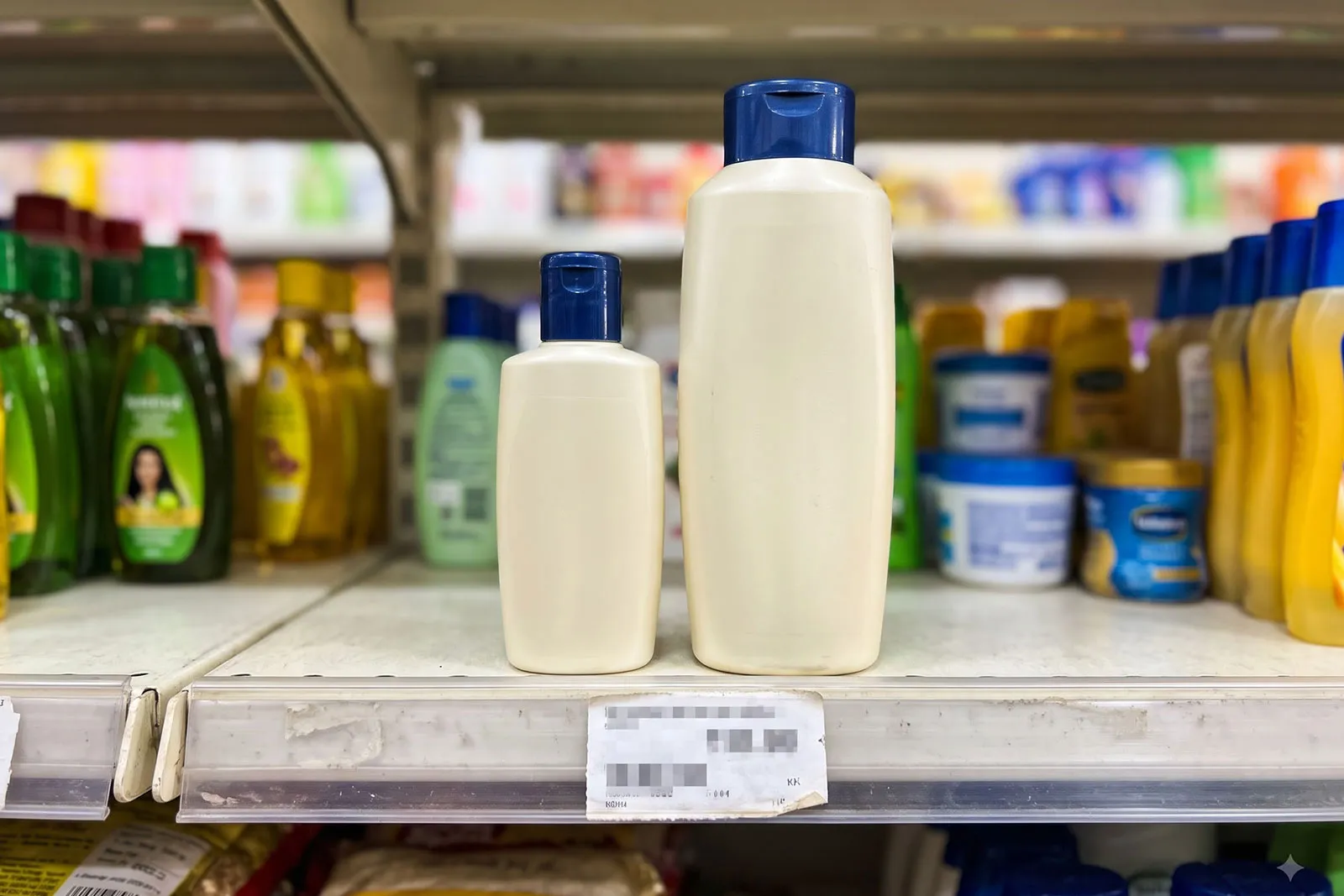
A 340 ml shampoo at one price, a 650 ml bottle of the same shampoo at another, and a "buy 2, save more" pack beside them. Which is cheapest? Indian packaging law answers most of that for you, in a line of small print most of us never read: the unit sale price.
Where the rule comes from
The government added the unit sale price to the Legal Metrology (Packaged Commodities) Rules in 2021, saying it would "allow easier comparison of the prices", according to the Press Information Bureau. The same change scrapped the old fixed pack sizes, which is why you now see odd sizes like 340 ml or 180 g. A 2022 amendment set the current wording in Rule 6(11), and the requirement was postponed several times before taking full effect.
How to read it
The unit is set by the pack size. Under the rule as amended, the price is shown in rupees, to two decimal places:
| Pack | Unit sale price shown |
|---|---|
| Less than 1 kg | per gram |
| More than 1 kg | per kg |
| Less than 1 litre | per ml |
| More than 1 litre | per litre |
| Sold by count (nappies, tea bags) | per piece |
This is where people slip. A 900 g detergent shows a price per gram; a 2 kg bag shows a price per kg. To compare them, multiply the per-gram figure by 1,000. Here is how it works with round numbers (an illustration, not real shelf prices):
- 500 ml shampoo at ₹300: ₹0.60 per ml.
- 1 litre of the same shampoo at ₹540: ₹540 per litre, which is ₹0.54 per ml. The big bottle is 10% cheaper.
- A "pack of 2 × 500 ml" at ₹620: no unit price printed, but 620 ÷ 1,000 ml is ₹0.62 per ml. The combo is the worst deal of the three.
The packs that skip it
Since January 2024, combination, group and multi-piece packages have not had to show a unit sale price. That covers the "shampoo plus conditioner" festive box and the three-soap bundle, which are exactly the packs sold as savings. Do the division on your phone's calculator: total price ÷ total quantity. Packs where the price equals the unit price, such as single items sold by count, are also exempt.
What else every pack must tell you
Rule 6(1) lists the details you should find on any pre-packed product:
- name and address of the manufacturer, packer or importer, plus country of origin for imports;
- the common name of the product and its net quantity;
- the month and year of manufacture;
- the MRP, "inclusive of all taxes";
- a consumer care phone number and email address.
A pack that holds less than its stated net quantity is a defect you can claim a refund for, as our returns and refunds guide explains. Online sellers have to show the same declarations on the product page, except the manufacturing date (Rule 6(10)). From 1 July 2026, shopping sites selling imported goods must also let you filter and sort by country of origin.
MRP: a ceiling, not a price tag
The rules forbid selling any pack above its retail sale price, and a shop can't change the printed MRP. The figure is a maximum, so treat it as a starting point. "40% off MRP" says nothing about whether the price is good. The unit price does. For appliances, the label that matters most is a different one: the BEE star rating, which tells you the running cost. For jewellery, it's the gold hallmark.
Prices of many personal-care items also changed recently. GST on shampoo, toilet soap, hair oil, toothpaste and toothbrushes was cut to 5% from 22 September 2025, according to the GST Council. If an old pack's MRP still reflects the higher tax, ask for the lower price.
Found a pack with no unit price, or one sold above MRP? Report it to the National Consumer Helpline (1915, or WhatsApp 8800001915) or your state's Legal Metrology department. For sale-season tricks online, read our guide to fake discounts and dark patterns.
Frequently asked questions
Is the bigger pack always cheaper per unit?
Usually, but not always. Offers on smaller packs often beat the large one for a few weeks. The unit price tells you on the day.
Does the unit sale price include GST?
It is worked out from the retail sale price, which must include all taxes, so yes.
Sources
- Amendments to the Legal Metrology (Packaged Commodities) Rules, 2011, Press Information Bureau, 2021.
- Legal Metrology (Packaged Commodities) Rules, 2011, as amended to May 2022, TaxGuru, 2022.
- Unit sale price deadline extended, S.S. Rana & Co., 2023.
- Legal Metrology (Packaged Commodities) Amendment Rules, 2023, TeamLease RegTech, 2023.
- Legal Metrology (Packaged Commodities) Amendment Rules, 2026 (G.S.R. 128(E)), Gazette of India, 2026.
- Recommendations of the 56th GST Council meeting, GST Council and Press Information Bureau, 2025.
- National Consumer Helpline, Department of Consumer Affairs, accessed 2026.