
The Maillard Reaction: The Science of Browning and Flavour
The Maillard reaction is the reason a seared crust smells better than boiled meat, why toast tastes different from bread and why roasted coffee has hundreds of aromas that green beans lack. It is a chain of reactions between amino acids and sugars, and once you understand what drives it (heat, dryness, time and pH) you can steer it in your own kitchen instead of leaving browning to chance.
What the Maillard reaction actually is
In 1912 the French chemist Louis Camille Maillard noticed that a solution of a sugar and an amino acid turned brown when heated. A 2025 review in the journal Foods by El Hosry and colleagues describes the reaction he found as non-enzymatic browning between nucleophilic amino groups, mainly from amino acids, peptides and proteins, and carbonyl groups, mainly from reducing sugars (El Hosry et al., Foods, 2025).
Two details in that definition matter in the kitchen:
- Reducing sugars only. Glucose, fructose, lactose and ribose take part directly. Table sugar (sucrose) is not a reducing sugar, so it does not react until heat or acid splits it into glucose and fructose.
- Protein is part of the reaction. The amino group of lysine is the main reactant, with smaller roles for cysteine, arginine and histidine. That is why protein-rich foods such as meat, paneer, eggs and milk solids brown so readily.
Three stages, from colourless to brown
The review divides the reaction into three broad stages:
- Early stage. A sugar and an amino group condense, then rearrange into a more stable compound (the Amadori product). Nothing visible happens yet: this stage is colourless and has no smell.
- Intermediate stage. These products break down into reactive fragments such as dicarbonyls. Through a side route called Strecker degradation, amino acids are converted into aldehydes that carry much of the aroma. Furans, pyrazines and other flavour compounds appear here, and so, in some foods, does acrylamide.
- Advanced stage. Small molecules join into large brown polymers called melanoidins, which give colour and also contribute to flavour and texture.
Because the starting mix of sugars and amino acids differs from food to food, the end products differ too. That is why a seared steak, a crust of bread and a roasted coffee bean all taste "browned" but nothing alike.
Browning is not one reaction but a cascade, and every food sends that cascade down a slightly different path.
Maillard reaction versus caramelisation
The two are often confused because both produce brown colour and roasted aromas. The difference is in the ingredients. The University of Guelph's food chemistry notes put it simply: caramelisation needs only sugars, while the Maillard reaction needs both amino acids and reducing sugars (Rogers Lab, University of Guelph).
| Feature | Caramelisation | Maillard reaction |
|---|---|---|
| What reacts | Sugars alone | Amino groups plus reducing sugars |
| Sugars involved | Reducing and non-reducing sugars | Reducing sugars |
| Effect of pH | Slowest near pH 7; faster below pH 3 or above pH 9 | Faster in alkaline conditions |
| Typical flavours | Buttery, nutty, butterscotch, and bitter if taken too far | Meaty, toasted, roasted, savoury |
| Kitchen examples | Caramel, brittle, the top of a crème brûlée | Seared meat, bread crust, roasted coffee, toasted nuts |
The same Guelph page lists the temperatures at which individual sugars begin to caramelise: fructose at about 110 °C, glucose at 150 °C, galactose at 160 °C, sucrose at 170 °C, maltose at 180 °C and lactose at 203 °C. Fructose's low threshold helps explain why honey and jaggery-based glazes darken so much faster than plain sugar syrups.
In most real cooking, both reactions run side by side. When onions are slowly cooked down for a masala, the natural sugars caramelise while those same sugars also react with the onion's amino acids. You do not need to separate the two to cook well, but knowing they respond differently to pH and temperature helps when something browns too fast or not at all.
What controls browning: the four levers
El Hosry and colleagues identify temperature, time, water activity and pH as the main factors that govern the reaction (source). Each one is something you can adjust at the stove.
1. Temperature
The reaction speeds up as temperature rises. It is not switched on at a single temperature: the review notes it also happens very slowly in refrigerated and even frozen storage, which is one reason some packaged foods darken over months. What changes with higher heat is speed and the kind of flavour compounds produced. The review reports that pyrazines and thiazoles, which give nutty and popcorn-like notes, increase notably above about 140 °C.
This is why a pan that is "hot enough" matters. Food in a moderately hot pan will brown eventually, but slowly enough that the inside overcooks first.
2. Moisture (the 100 °C ceiling)
Water boils at about 100 °C at sea level. As long as the surface of a food is wet, the energy from the pan goes into evaporating that water and the surface stays close to 100 °C. Only once the surface dries can its temperature climb into the range where browning is fast.
Water also affects the chemistry directly. The review reports that the Maillard rate peaks at a water activity of roughly 0.6 to 0.7, and falls at very low or very high values, because too little water stops reactants moving and too much dilutes them. The Guelph notes add that the reaction itself releases water, so a high water activity works against it.
In practical terms:
- Pat food dry before searing, including any liquid that salt or a marinade has drawn to the surface.
- Do not crowd the pan. Pieces packed tightly release steam that cannot escape, so they stew in their own liquid.
- Preheat the pan so the surface is hot before food goes in.
- Leave food alone long enough for a crust to form before you turn it.
3. pH
Alkaline conditions speed the reaction because more amino groups are in their reactive, uncharged form. The review states that the reaction is very slow below pH 6 and that a pH of 5 or lower is generally enough to stop it under moderate heating. Melanoidin production also rises at higher pH.
Two kitchen consequences follow. First, acidic marinades with lime juice, curd or vinegar can slow surface browning, so it helps to wipe off excess marinade before searing. Second, a slightly alkaline surface browns faster, which is the logic behind recipes that add a very small pinch of baking soda to onions or to some glazes. Use it sparingly: it changes texture and taste as well as colour.
4. Time
Browning follows a slow start, then a faster phase, then a plateau. The review notes that very short heating gives mostly early-stage products with weaker flavour, while prolonged heating pushes colour towards black and adds bitterness and off-flavours. Good browning sits in the middle: deep golden to mahogany, not charred.
Where you see it in an Indian kitchen
The reaction is everywhere once you look for it:
- Tawa rotis and parathas: the brown spots form where the dough is in direct contact with the hot, dry surface.
- Bhuna and tadka: frying onions, spices and pastes until the oil separates and the masala darkens builds browned and caramelised flavour.
- Tandoor and grill: dry, intense heat browns the surface of marinated paneer, chicken and breads quickly.
- Milk sweets: slowly reduced milk turns from white to cream to brown as lactose and milk proteins react, which is part of what gives khoa-based sweets their colour.
- Roasted nuts, seeds and coffee: dry roasting builds the toasted notes that raw versions lack.
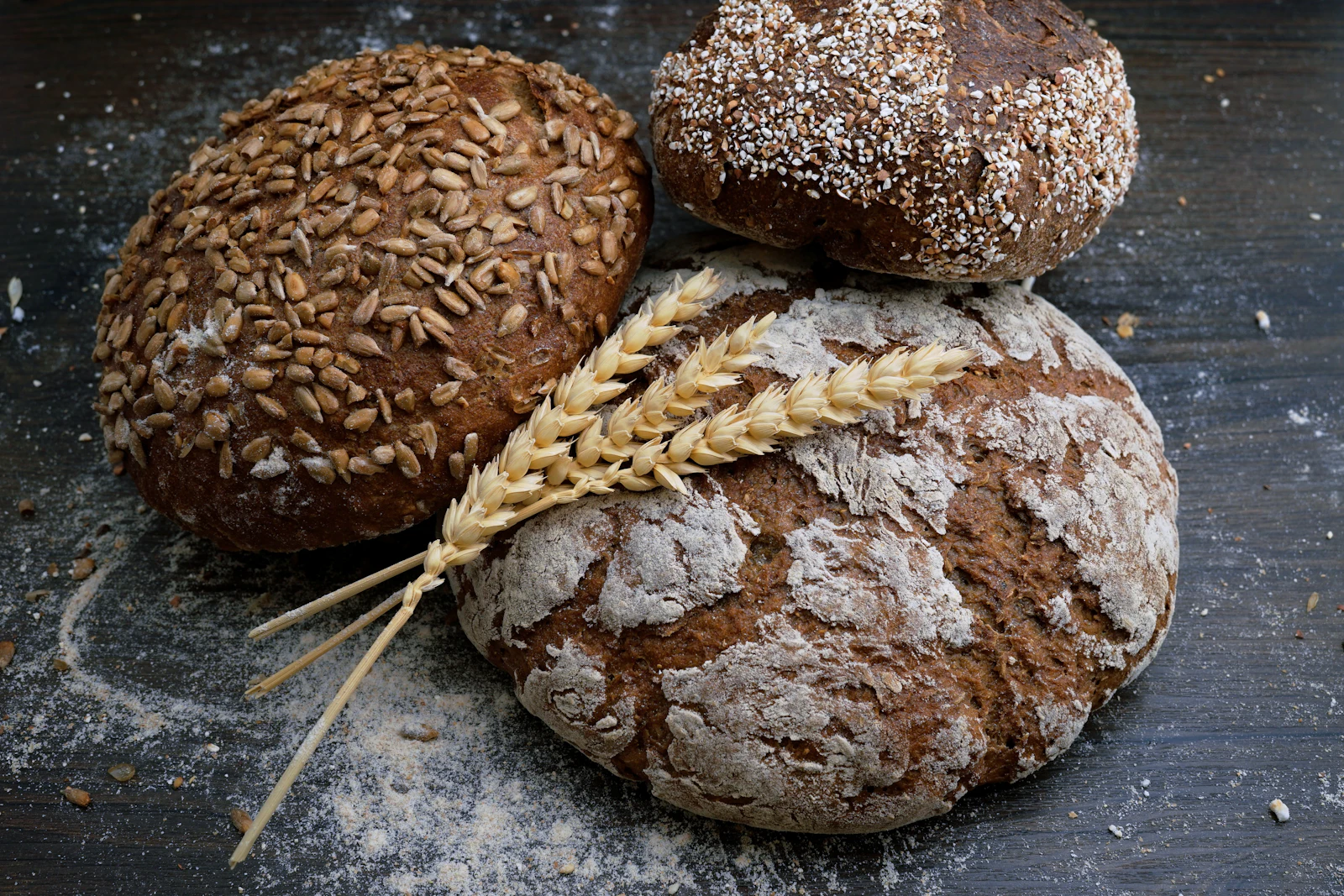
Bread crust is one of the clearest examples, because the dry outer surface browns while the moist crumb stays pale. Our guide to sourdough bread chemistry and crumb structure covers how steam and oven heat affect crust colour, and our guide to gluten development, kneading and autolyse explains what happens inside the dough before it reaches the oven.
Sous vide and the reverse sear
Low-temperature methods show the 100 °C ceiling in action. Food cooked in a water bath at 55 to 65 °C never browns, because its surface never gets hot or dry enough. Cooks therefore separate the two jobs: cook the inside gently first, then dry the surface and give it a very short, very hot sear. Our guide to sous vide cooking at home covers the safety side of the first step.
The downside: acrylamide and charring
The same chemistry that makes food taste good can also form compounds you would rather limit.
Acrylamide in starchy foods
The US Food and Drug Administration explains that acrylamide forms from natural sugars and the amino acid asparagine during high-temperature cooking such as frying, roasting and baking, and that longer cooking times and higher temperatures tend to increase it (FDA, Acrylamide Questions and Answers). The main sources are certain potato products such as chips and French fries, coffee, and grain foods such as breakfast cereal, biscuits and toast. Boiling and steaming typically do not form it. The FDA notes that animal studies linking acrylamide to cancer used very high doses, and that the Joint FAO/WHO Expert Committee on Food Additives called it a human health concern in 2010.
The FDA's consumer advice on reducing acrylamide (FDA, Acrylamide and Diet, Food Storage, and Food Preparation) is practical:
- Soak raw potato slices in water for 15 to 30 minutes before frying or roasting, then drain and blot them dry.
- Store potatoes in a cool, dark place rather than the fridge, because refrigerated potatoes can form more acrylamide when cooked.
- Cook fries and potato slices to golden yellow rather than brown.
- Toast bread to light brown and avoid very dark areas.
The FDA does not advise people to stop eating fried, roasted or baked foods, and it specifically does not recommend cutting back on whole grains. Its advice is to follow a balanced diet and avoid taking browning to excess.
Charred meat
Muscle meat cooked at very high temperatures can form heterocyclic amines (HCAs), from reactions between amino acids, sugars and creatine, and polycyclic aromatic hydrocarbons (PAHs), from fat dripping into flames and smoke. The US National Cancer Institute's fact sheet notes that both are mutagenic in laboratory tests, that animal studies used doses thousands of times higher than normal diets, and that human studies have not established a definitive link to cancer (NCI, Chemicals in Meat Cooked at High Temperatures and Cancer Risk). Its suggestions to reduce exposure include avoiding direct contact with open flame, turning meat often, partly cooking it first (for example in a microwave) to shorten time on high heat, and cutting off charred portions.
A simple method for better browning
- Dry the surface. Pat meat, paneer, tofu or vegetables dry with a clean cloth or paper towel.
- Choose the right pan. Heavy pans such as cast iron hold heat, so the temperature drops less when food goes in.
- Preheat, then add a thin film of oil. The oil helps transfer heat evenly into an uneven surface.
- Cook in batches. Leave space between pieces so steam can escape.
- Wait for release. Many foods stick at first and loosen once a crust forms.
- Stop at deep golden brown. Pull back before black or bitter, especially for starchy foods.
The bottom line
The Maillard reaction is browning between amino groups and reducing sugars, and it produces much of the flavour we associate with cooked food. You control it with four levers: enough heat, a dry surface, enough time and, where useful, a slightly less acidic surface. Caramelisation is the sugar-only cousin that often runs alongside it. Aim for deep golden rather than dark brown with starchy foods, avoid charring meat, and always judge doneness with a thermometer rather than colour.
Frequently asked questions
At what temperature does the Maillard reaction happen?
There is no single switch-on temperature. The reaction occurs slowly even in cold storage and speeds up as temperature rises; research reviews report that many roasted, nutty aroma compounds increase notably above about 140 °C, which a wet surface cannot reach until it dries.
Is the Maillard reaction the same as caramelisation?
No. Caramelisation involves only sugars, while the Maillard reaction needs both amino groups from proteins and reducing sugars. In most cooking both happen at the same time.
Why does my food steam instead of brown?
Usually the surface is too wet or the pan is overcrowded. While water is evaporating, the surface stays close to 100 °C, which is too cool for fast browning.
Does a dark crust mean the meat is cooked?
No. Browning shows what happened at the surface, not in the centre. The FDA advises using a food thermometer to confirm that meat, poultry and fish are safely cooked.
Is browned food bad for you?
Moderate browning is normal and adds flavour. The FDA suggests limiting acrylamide by cooking potatoes and toast to golden rather than dark brown, and the NCI suggests avoiding charring meat over open flame.
Sources
- Maillard Reaction: Mechanism, Influencing Parameters, Advantages, Disadvantages, and Food Industrial Applications: A Review, El Hosry L. et al., Foods 14(11):1881, 2025.
- Caramelization and Maillard Reaction, Rogers Lab, Department of Food Science, University of Guelph, accessed 2026.
- Acrylamide Questions and Answers, US Food and Drug Administration, 2024.
- Acrylamide and Diet, Food Storage, and Food Preparation, US Food and Drug Administration, 2024.
- Chemicals in Meat Cooked at High Temperatures and Cancer Risk, US National Cancer Institute, accessed 2026.
- Safe Food Handling, US Food and Drug Administration, 2024.